Pages

Wednesday, February 25, 2009

Finding our deepest identity


[During Lent we will be following a local series of lections.If you are looking for the Common Lectionary References try here Revised Common Lectionary]

This Sunday 1st March 2009 the focus reading is Mark 1:9-15. Mark's account of the baptism of Jesus

A lot happens in the first chapter of Mark. In the space of these few (only 7) verses...Jesus is baptised, he hears the voice of God, he goes into the wilderness and is tempted by Satan. John is arrested, Jesus goes back to Galilee and he makes a public declaration of what his ministry is about.

"The time is fulfilled 

and the kingdom of God has come near

therefore I call you to repent and believe in the good news"


It's a lot!
The Spirit affirms Jesus in the profoundest way possible
What ever it means, Jesus hears the voice of God saying
"You are my Son, and I love you, and I am well-pleased with you"
What does God say to you? What is God saying to me?
At our deepest level?
In Lent we are being invited to pay attention to God.
The idea of God speaking to us
is not without problem.
What do we mean by it?
It is not clear, for example, in this passage
whether Mark wants us to understand this as an external, audible voice.
Whether others might have heard it,
or whether this is just fanciful stuff.
I suspect if we allow ourselves to accept this passage,
not worrying too much about the mechanics of what is being addressed
that many of us would allow that God might be speaking to us
(heart-to- heart someone suggested to me during the week).

The wilderness
What unlocks some of this for us is that the same Spirit
who speaks this deep affirmation of Jesus's personhood
drives (a very strong word) Jesus into the wilderness.
This wilderness as we know, is an ambivalent place,
at once threatening (beasts)
but also where we are thrown back on total reliance on God.
It is as though Jesus not only has to hear the affirmation
but also then to go and appropriate it.
This needs the confrontation and threat of the wilderness.
It is not just nice words.

What might God be saying to you at this time of your life?
Can you take time this week to struggle with that a bit?
What don't I like about what God is saying to me?
Where do I resist? Where am I vulnerable?
Where do I deceive myself...about myself/about God?

It is out of this struggle
that Jesus comes to some realization
of what is happening!
The time is now, God is close
Things must change...I need to repent, to behave differently
(what will this mean for me today)
The time is NOW!
This Good News, if we are to believe it,
is for now
and will affirm us at our deeepest  level.
It will require some change,
and that we trust God for all that is necessary to effect it.
It is not without beasts,
but also with angels!
Do we trust God enough to enter into this?

THIS WEEK
  • What is God saying to me at my deepest level (heart to heart)?
  • Can I strip back everything and allow the wilderness to speak this to me?
  • Will I decide to embrace the freedom that is being offered? To be free of sin? To live as one who tries to accept others? To embrace the possibility of failure? To trust only God?
  • What is to stop me doing this now?
+


Monday, February 16, 2009

Just round the corner

Readings for Sunday 22nd February. 2009: 2 Ki 2:1-12; Ps 50:1-6; 2 Cor 4:3-12; Mark 9:2-9. The Last Sunday After Epiphany - The Transfiguration of Jesus

Well we have got to that point
where Lent is just around the corner
almost, but not quite, as late as it could be.
For most of the world, of course,
Lent means little or nothing.
Although in some ways like the great Moslem fast of Ramadan
Lent is probably less well known.
It is for Christians a time when we get our act together
There are many traditional ways of doing this
and they are not without merit
But let me draw yoiu attention to three of the more obvious ways
for Christians to "get their act together".
Prayer
At the heart of any Christian's life
is our relationship with God
so we will want during these 40 days
to try and strengthen that relationship .
like any relationship it is strengthened
through quality time.
If we want our relationship to get better then we need to commit to it.
Lent gives us a focus time...less than 6 weeks
so it is not a long commitment
and we find each year that it is worth it.
I suggest...three E's
Each day-make a commitment to pray at least once each day
The Lord's Prayer, a time of quiet or a short time to pray for someone special
Each week- as part of our commitment to build up each other
let's endeavour to make each of the Sundays in Lent
a time when we will be there
Extra-
I do not think prayer is about volume or length of time
It is about "quality" time not "quantity"
So what I need to give during Lent
is extra quality.
This might mean making sure that we give proper attention and not pray on the run
It might mean keeping a little Lenten journal
or setting aside a deliberate time each week to just be together with God.

Giving
The one thing people often do know about Lent is "giving things up"
this giving things up...lollies, alcohol, meat, bread or what ever
breeds a little space and a little discipline.
It allows us to be more conscious of those who have not
and also to redirect some of our resources through giving


Certain 'traditional' support has often been highlighted

and they are worthy of our consideration.

Not so much 'what takes your fancy' as where do I feel the Spirit challenges me to be generous and give


  • Charity

  • The Poor

  • Mission

  • Jerusalem

  • The Church

What appeals to you? Make it a special 6 week project.

Service
Our relationship with God is fostered through our care and service of others
Lest we think that Lent is a narrowly religious exercise
or even that Christianity is "narrowly religious"
we balance our spiritual exercises with our service and ministry.
This is the mistake that Peter makes on the mountain today
Seeing Jesus for who he really is ...the glorified one of God....
he doesn't know what to do.
We could think of a thousand things
let's tell others
let's inspire each other
let's commit to follow him to the end
But Peter says "No!! Let's build a shrine"
And Jesus has to say No!
There is suffering to be shared
there is work to be done.
So where will you serve this Lent.
I suggest that the words we need to guide us are these:

Personal
Responsive
& Unconditional

We need to respond in such a way that we are caring for a real person
and not an idea, or a bureaucracy
It will in a practical sense involve us with another person.
We need to be responding to real needs
That is doing what God want us to do
and not what we think we should do.
So often what we choose to do
serves our own needs
instead of those of others,
we do what makes us look good and successful
instead of what attends to the needs of another.
Finally our service should be unconditional.
We help a sick person go the doctor
so that they might get well
Not so that they might come to church.
We take food round to the family who have lost their father
because they need food
not so that they will do it to us in return.

Prayer Giving and Service.
Do not think you can do everything or the impossible.
Have a think about what you can do,
write it down
so you can promise yourself
and promise God

Do not be deceived into thinking Lent

is a pious few weeks, rather accept it as a challenge

to become mroe deply in love with God.

Sunday, February 08, 2009

Readings for this Sunday the 6th After Epiphany, 15th February 2009 are 2 Kings 5:1-14 1 Corinthians 9:24-27 Mark 1:40-45 Psalm 30
In this week's readings we see something of the application of
Healing, wellness, and wholeness
God wants more for us than we want for ourselves
The story of Naaman the leperthat we read this week
is a confronting one for all of us who think
we have our lives well under control.
Naaman is a powerful, successful man
and yet he is sick.
He has the sort of sickness
that people will not tolerate socially-leprosy
Quite what this was in his case is not clear.
we have rather poor attitudes
to leprosy
largely what we have been (wrongly) taught.
(see for example the life of Damien of Molokai)
Nevertheless it is something that would have taken
Naaman out of circulation,
perhaps by disfigurement
certainly because of ritual prohibitions
designed to prevent infection
---Primitive but effective---
Naaman, like many who become seriously sick,
find their life is taken over
and they are no longer free to do what needs to be done.
Naaman
the handsome,
the powerful,
the successful
is sick.
What to do?
He uses his connections to get to the doorstep of Elisha.
He will have done this sort of things many times before.
As a highly motivated person he is used to
identifying the problem
finding a solution
and effecting the operation.
This is how a highly successful person operates.
The only trouble is that sickness
is not a cash flow problem
it is not a stock shortage
or a management crisis.
If we are to be made whole
then we will need more than just management
or even skill.
We will also need openness to God
a fair degree of humility
and preparedness to change.
If you think about in-depth healing
or wholeness
we understand that there is more to it
Confrontation
so he is deeply confronted.
Elisha is not actually over-impressed by his status
he can barely come out of his house
he sends an underling to communicate with Naaman
and Naaman is not impressed.
Let us look at some of the things that Naaman does
which might expose some of the issues
he brings lots of money
but his healing is not going to be paid for by lots of money
he shifts the responsibility to another person,
In the process that person (the king of Israel) is deeply stressed
and he doesn't know what to do.
We often do this.
This is different from sharing the responsibility by inviting others to pray for you.
Healing will require that we open ourselves
not just that we get someone to do the slog for us
he needs to learn about simplicity, humility and obedience.
Elisha is very offhand with him.
He refuses to let Naaman think that this is the only problem in the world.
This is hard for us to endure.
In the end he is required only to be faithful to a simple process and to submit to that
he is seduced by the spectacular.

"‘I thought that for me he would surely come out, and stand and call on the
name of the Lord his God, and would wave his hand over the spot, and cure the leprosy!

Are not Abana and Pharpar, the rivers of Damascus, better than all the waters of
Israel? Could I not wash in them, and be clean?’ He turned and went away in a
rage.".


..when things do not go as he wants
then at least he demands spectacle
spectacle that shows he is pretty special?;
spectacle that shows God is taking notice?

Are you beginning to get the idea that there is a lot going on?
Naaman needs to confront a whole lot of stuff in himself:
Pride, arrogance, self-righteousness, lack of faith....
all of these things will be up for grabs
if we open ourselves to wholeness rather than just removal of symptoms.

Finally, the Gospel reading (Mark 1:40-45)
tells of another lepe the dialogue with Jesus says...
"‘If you choose, you can make me clean.’ Moved with pity, Jesus stretched out his hand and touched him, and said to him, ‘I do choose. Be made clean!’
There is (again) more here than waving of hands
the man is asking to be brought inside the ambit of Jesus's life and faith...
If you choose
and we are assured that Jesus does choose
But he chooses not just curing symptoms
but fulness of life
wholeness
not just a narrow healing.
To us Jesus says, I do choose...
but we may have to confront,like Naaman,
our pride, our lack of humility,
our notion of our own importance,
certainly our sinfulness
and be prepared to enter into the abundant life
that we are being offered.
...more coming

Sunday, February 01, 2009

Getting down to it

Readings for reflection for Sunday February 8th 2009: Epiphany 5 - Isa 40:21-31, Psalm 147:1-11; 1Cor 9:16-23; Mark 1:29-39

I always find Jesus' encounter with Peter's mother-in-law a bit shocking.
How men so often presume on the generosity fo women,
not even recognising that they are not well,
and just assuming that they do what they are told.
They have obviously never lived with the 4 sisters, or the 3 daughters
that I have been blessed with.
None of whom have done what they are told!!!

But I think there are some points in this story
that we overlook:
Jesus heals so that we might live our lives with better quality
not so that we might continue to moan about being sick.
We are healed so that we can continue living
and so we should not be surprised
when a sick woman gets healed
and gets on with her life!

Nor do I think that we should overlook
that Jesus heals even when the sickness seems to us
to be minor.
I never understand people who say
"Don't pray for me, there are others more needy"
As if there is only so much to go round.
This story at least might tell us that
God's concern is not just with 99% sickness
and maybe we should be more faithful in bringing even small matters
to God for healing.

THIS WEEK
Is there somewhere we have been healed, forgiven, reconciled where we haven't actually appropriated that gift? Have we chosen to remain sick when we are actually healed?
We don't need to play games, but nor do we need to lack faith.

Are there some areas of our life that we think are not important enough for God's care?
Do we maybe even consider that we are not important enough for God's grace?
Pray to trust God in all things great and small!

Wednesday, January 28, 2009

The authority of Jesus

The readings for Sunday February 1 2009: Epiphany 4 - Deuteronomy 18:15-20; PSALM 111; 1 COR 8:1-13; MARK 1:21-28

In this first chapter of Mark we are gradually brought into the process of understanding who Jesus is.
We have seen how individual disciples
are called to follow him
and now we have declared about him
that he has Authority.
The authority is no less than that of the authority of God.
This is why he is so important
he puts us into touch with the reality of God.
If we want to know God’s will,
if we want to understand God
then we look to Jesus.

The problem of authority is not without issue
Moses tells the people how to discern whether a person speaking in God’s name is an authentic prophet:

His principle is “If prophecy comes true then it is vindicated!”
This may raise more questions than it answers
Paul also tells people that they need to exercise discernment about what they believe and practice
While there are no longer “rules” not everything is necessarily helpful.
He tells people to be sensitive to other people’s weaknesses.

What Mark’s statement is about this is...that we have a new seat of authority
Jesus….the signs and wonders that he does, and principally his resurrection, validate his authority.

How then can we be in touch with Jesus?
It is simple and it is hard!
Simple because it is the straightforward job of just doing it: through, prayer, scripture, worship, talking with Jesus. By serving Jesus in others.
It is simple basic Christian stuff

But hard because we are also a bit deceptive about this sort of stuff
and it requires
honesty, openness and integrity
It is interesting to note that this does not always go down well.
And we ourselves can be slow to respond
or even just plain wilful.
This week:
  • What is Jesus saying to me about my life?
  • How can I better respond?
  • Can I pray deliberately each day to pay attention to God’s will for my life and to respond to that

Monday, January 19, 2009

Coming back to God

Reading for Sunday 25th January 2009 are for the 3rd Sunday in Epiphany and can be taken from: Jonah 3:1-5, 10; Psalm 62:5-12; 1 Corinthians 7:29-31; and Mark 1:14-20

Unfortunately most of us know only one thing about the prophet Jonah
and that is that he was swallowed by a big fish!
It is of course a compelling story, but what is it actually about.
Most of us don’t know that Jonah was actually running away from God
nor that God had asked him to go to the roughest toughest place in the world and tell the people to repent
(no wonder he ran away)

When he finally yields to God’s will
he gets annoyed with God
because God accepts the repentance of the Ninevehites
and doesn’t just blast them out of the water!
This repentance is a call to change our ways
As we continue to focus on the call of Jesus
are we like Jonah and running hell for leather in the other direction?
and/or are we also angry that some people seem to get closer to God than we do? Particularly angry that so often it seems they are the ones who don’t deserve it.

The Call to Repent is genuine
This call that we hear to get serious is a genuine one
God is not playing games with us
but are WE playing games with God
The time is short
people need to be healed
Sinners need forgiveness
It is not a call to wait until it is convenient
It is a call to act now.
So we see:
these disciples drop everything and act
those who, like Jonah, run away are pursued by a devouring spirit. The sources of discomfort and disease may well be our own wilfulness

Where am I being invited to act, and to act now?
Where am I running scared?
Where am I resentful of God’s grace to others?

The call to repent is a genuine one
It is not only to other people via my mouth (it may be)
It is also to me...to you
And yes, the time is short
...the time to act is now….

Sunday, January 11, 2009

Hearing the call of God

Readings for Sunday January 18, 2008...The 2nd Sunday after Epiphany include I Samuel 3:1-10, (11-20), Psalm 139:1-6, 13-18;I Corinthians 6:12-20; John 1:43-51
I find the story of Nathanael (or Bartholomew as he seems to be known elsewhere) in the first chapter of John to be strangely intriguing.
John is still setting up for us the thrust of his gospel
and thus having declared that this is the Word made Flesh, the Lamb of God, the Messiah
people are drawn into the circle of faith
Simon Peter and Andrew respond readily and quickly, Philip is not far behind
but Nathanael...is not so easily convinced...his natural instinct is to be dismissive...he has perhaps (like us)
heard all this before.
Philip says to him...Why don’t you just come and check it out!
Because Nathanael does decide to adopt this open
attitude
he is able to hear Jesus.
Jesus speaks to him in a fairly low key sort of way….here is someone who calls a spade a spade….
and Nathanael, I think, likes being taken seriously
and finds this Jesus engaging,
and so follows.
A lesson for us
the two dimensions that I think we can well pay attention to are:
not taking the call of God for granted or just hoping it might go away (this is echoed in the Samuel story)
this is often the way we deal with our religious conviction
...let’s not take it terribly seriously…..
I suspect that this is the cause of great spiritual weakness in the church today
Nathanael’s stance (and indeed Samuel’s) is
give God the opportunity
and God will do what is necessary
....but we need to give God the opportunity.....

The second thing that we can note is that Philip is a source of encouragement to Nathanael (as Eli is to Samuel)
Without that comment...Come and See... or Go back and listen again...
would Nathanael or Samuel have taken the final step

Is there someone who we have to support in a similar way?
Can we ask God to show us that this week, and also to give us the faith and the courage to be quietly and gently supportive?

  • Are we prepared to look again at what God is seeking of us?
  • is there someone I need to encourage?
The Illustration is Open Voyage by Michel Rauscher

Sunday, January 04, 2009

And this is my beloved

Readings for Sunday January 11, 2008...The Sunday after Epiphany include Genesis 1:1-5; Psalm 29; Acts 19:1-7; Mark 1:4-11
In these weeks after the feast of the Epiphany (January 6th...or Twelfth Night) we focus on how Christ is made known beyond the bounds of the inner circle of God's revelation.
It begins on January 6th when the Christmas story is expanded by the arrival of the Wise Men
this is to show us ('epiphany' means to manifest or to show forth)
that this Christ, is not just for the narrow concerns, of a little group of people
in a strip of Mediterranean Land which is presnetly much-troubled
but for the whole world.
The Wise Men are presented in Matthew as the fulfillment of prophecy
that shows God will be made known through this Messiah
to all peoples (see the readings Isaiah 60:1-6; Psalm 72:1-7, 10-14)
As the story moves on we see one of the incidents in which the identity of Jesus is declared
...the event is his baptism by John, which Mark offers as the beginning of the Good News..
What is interesting to us is what this baptism confers
It is an understanding that as God speaks into the situation
this is what he says
"You are my son, the Beloved; with you I am well pleased"
These words will be spoken again at the Transfiguration
when the disciples recognise Jesus
for who he really is.
And because the climax of Mark's Gospel is the Crucifixion
we are invited to see
that these are words that are spoken at that time, this time by the centurion who says for all to hear
"Truly this man was God's Son"
Because in Mark's Gospel we are being invited to share
in this journey
These are words that we might see
are being spoken to us
"This is my Son, the Beloved"
"You are my daughter, and I love you"
I find these words deeply assuring
and perhaps we need to hear God saying this to you and me
often and deeply during this Epiphany season.
--You are my son, and you are my daughter--
and I love you!
This is not the message of idle comfort,
rather it will lead us, like Jesus,
to the Cross.
Our faith tells us
that the Cross, though it looks like death,
is the way to fullness of life.

THIS WEEK
  • Allow God to assure you of his love for you, and to confute everything that says anything less than ...I love you, and I am well pleased
  • Pray for Grace to respond to that love, and to open yourself to the power fo the Holy Spirit
  • Pray for Courage to embrace the Cross

The icon of the Baptism of Jesus in this post is by Chinese artist He Qi

Wednesday, December 31, 2008

The Word is made flesh


Suggested readings are: Jeremiah 31:7-14 or Sirach 24:1-12
Psalm 147:12-20 or Wisdom of Solomon 10:15-21; Ephesians 1:3-14 John 1:1-18


One of the most trenchant criticisms of a practising Christian is
That quaint little saying
THEY ARE SO HEAVENLY THAT THEY ARE NO EARTHLY USE!

We do not need to discuss why people might say such a thing
But it often seems to me that it is a way of easily dismissing
the demand of the Spirit on our lives.
It suggests that things SPIRITUAL
Are somehow fundamentally disconnected from things MATERIAL
more than this, it says that spiritual focus is probably less important
than our pedestrian every day focus.
An example ...when we have a problem...and we are advised to pray...we may keep quiet about it
but often we think spiritual advice is not practical advice
Today as we read John’s prologue...we hear what are probably the most important words he will utter
THE WORD BECAME FLESH AND DWELT AMONG US

It is touching this issue of the connection between the spiritual and the material world
reminding us
that this material life
is now rather different
because it has been caught up completely in the Godly life.
It is not one or the other.
For the Christian, this has been interpreted as saying that God is vitally concerned about the human condition
so concerned that
HE BECAME FLESH
Far from being so heavenly it is of no earthly use
the Incarnation—–the enfleshment— of God
reminds us that the spiritual will be worked out
in the material.
It will be as we live our lives
tend to the needy
address the environment
live our lives in reality
that we will understand that the
Spiritual and the Material are united
that you don’t have one without the other.
If we want to be holy
we will be vitally caught up with
serving God in others
...Christianity cannot be an escapist religion….
we are called to service and ministry
of others
particularly the weakest of the weak.
This is what God has done…
The Word has become flesh…
so this is our call to service
whether it be through Kids Hope, Kids in court, helping our neighbour, seeking to improve our world.
We do this because we recognise the key message of Christmas.
This material world...is the dwelling place of the Word of God.
It is (if you like)
heaven!

Saturday, December 27, 2008

The Hidden Years

Sunday 28th December is sometimes kept as Holy Innocents' Day, or we think of it as one of the feasts of the Holy Family suggested readings for this year are: Isaiah 61:10-62:3; Psalm 148; Galatians 4:4-7; Luke 2:22-40

Children, particularly small children attract a lot of attention
In these days a lot of it is tentative,
and we are cautious about the unsolicited attention of people not known to us.
Today we see Jesus encountering two people
Who rather fall into that sort of category:
Simeon and Anna.
They are devout people.
Perhaps we are called to remember
That there are some people
Who can help us to see things differently
I have appreciated over the years
The insights of some who have helped me to see my children differently.
(We can be blindest to those to whom we are closest!)
So SIMEON is able to tell Mary and Joseph right from the start:
THIS CHILD, WHO YOU LOVE SO DEARLY
AND FOR WHOM YOU HAVE SUCH HIGH HOPES, IS ALSO GREATER THAN YOU THINK OR IMAGINE.

I wonder if this might be an insight that we all need to appreciate.
As careful and as faithful, as our hopes and expectations for those we love might be,
God’s plans will be deeper and profounder, and we need to be open to that.
The prophetess ANNA is often glossed over, but she reminds us
that this is not just (or only) the musings of a crazy old man.
It is the sincere reflection and agreement of two faithful people.
They remind Mary, too, that her life and her destiny will be caught up intimately with that of her son
—–AND A SWORD WILL PIERCE YOUR OWN HEART ALSO—–

God invites us to look more closely at the destiny of his chosen ones
We often (even usually) see less than God does
We are called to look with faith
And to work in concert with God’s purposes
To expand our vision
Even thought it may (at times) be difficult.

So there are two things we might profitably ponder:
As we see that we are being pointed to the fact that there is more about Jesus than meets the eyes.
It is a reminder that we may treat Jesus like this ourselves.
We diminish his importance and hence his call upon our lives.
It is almost certain too, that we need to be reminded about those closest to us...that our lives are intertwined .
We share the space, and are called to bear the burden.
What does this call of Christ,
and call of the other elicit from us today

Wednesday, December 24, 2008

Who is Christmas about?

One of the disarming things about a baby
is that it grabs our attention.
My daughter and I were sitting in a shopping centre the other day having lunch
and there next to us was a sleeping baby.
We both admired and smiled at said infant.
This is the universal experience of people
and is a reminder that Christmas
is about something other than ourselves.

We're disarmed by this baby
for a few moments.
our self-interest
and narrow focus on our own little world
is challenged.

Then we discover
that coming together in this child are two things
the eternal Word of God
and the human race.
While this concerns us
and indeed affects us
WE are not the centre of this story.

To remind us of the fact that this is God's story
in which we are caught up,
and not OUR story
in which we might deign to allow God a place
there is that focus which grabs our attention.
It is a baby.
The one thing in human life
that serves to remind me
that life does not revolve around me alone.

If we latch on to this point
if we understand that life is about God
then things will work rather differently.

Perhaps this is why we so often feel
that things are out of control.
Or why we have no purpose.
We are looking at ourselves,
when we should be focussing on God.

How might God be trying to grab your attention
at this time,
and what might God be saying...
..it might indeed be by a baby
..or a particular concern...
..an opportunity, or sickness....
...a challenge, a failure or a success...
Very often it will be about another person
and we're challenged to understand that there is more going on in life
Than my narrow wants or wishes
The language of Christmas
is rather of hope....
The Prince of Peace, the Wonderful Counsellor,
reconciliation between enemies

the invitation is to shift the perspective from selfish wishfulness
which is almost always about me and what I want
to HOPE
and what God wants for me, and you.

The baby reminds us.
This is not about me.
It is at the very least about a baby,
it is in reality about what God's hope is for you and for me.

Monday, December 22, 2008

Paying attention

Readings for Christmas include more reading from Isaiah, various lessons from the letter to Titus. Luke Chapter 2, John chapter 1, and many more..In our church we will focus on Isaiah 9, Titus 2 and Luke2 (see here)

There is something disarming about a baby!
If we accept the general parameter about this story
that in this event God is being made flesh.
We might ask ourselves
why did God choose to be born as a baby
and not just appear in glory,
inviting us all to bow down and worship?
Being God he could do this!
Perhaps the chief thing that we need to note is
that whilst being an extraordinary event for a family
the birth of a baby is also a very ordinary event.
And this alerts us to something about the presence of God in life.
Though, of course, being mindful of the fact that God in our lives
is the key idea that we need to address
if we are going to live our lives meaningfully,
perhaps we fail to realise
that while this is really extraordinary
.....The Word is being encountered in the flesh....
it is also ordinary.
It is not with trumpets and loud explosions
but in the midst of day to day life.
Unnoticed by most
other than those who are directly involved
Some shepherds spot the significance of a baby's birth
but the wise men take a long time getting there
and then get lost.
We are reminded in the Christmas story
that God is not hard to find
we just have to look in the right place.
So we get little insights from time to time,
like the birth of a baby
or the death of a loved person.
God is not far and remote,
but close and near.
He will be in our day to day relationships,
with our children and our friends
more so, I suspect,
than in the halls of the rich and powerful, or in the lives of the famous.
We will find that the Good News
of Immanuel
-God with us-
is more likely to be small and close,
than big and grand.
Where is God beckoning you and me today.

This forgiveness that we talk about,
will not only be about Reconciliation between black and white,
but it will be about the relationship between two brothers,
and the unconditional acceptance of friends
drawn together in love.
We will find it close
rather than far.

Sometimes we will miss it completely,
never understand that
love and hope, trust and forgiveness
are about the way we live our day to life
and not just about th high goals we set ourselves.

The baby confronts all this in us
as we encounter it.
Will you allow yourself
to encounter the small and simple
the direct and personal
and see that this is Christmas for you

Tuesday, December 16, 2008

O Bethlehem!


Readings for the last Sunday in Advent. Sunday 21st December 2Sam 7:1-11, 16, Magnificat, Romans 16:25-27, Luke 1:26-38
We experience a lot of Christmas input at this time One good question I heard asked about various school and church presentations was:
Why all these stories and plays with a Christmas
theme What's wrong with the story of the stable at Bethlehem.........?

There are of course many representations of that story and it is rich in symbolism, myth (in the finest sense of that word) and cultural nuance
When in doubt we should allow God's Word of Scripture to do its wonderful work in our hearts So take time this week to read the readings and just to allow them to speak to you. As you sit through the endless Carol Services take time too to be a little more open. Remember, as we see in this week's readings, that Christmas is God showing himself to us in human form. It is about understanding who God is, and what God is about.
So we find that Mary, when confronted by the angel has to begin on a journey of discovery because she does not understand what all this might mean
"29But she was much perplexed by his words and pondered what sort of greeting this might be"
And Paul tells us at the end of
Romans as we read today
"the proclamation of Jesus Christ, according to the revelation of the mystery that was kept secret for long ages
26but is now disclosed, and through the prophetic writings is made known to all the Gentiles, according to the command of the eternal God, to bring about the obedience of faith"
The sort of message, that so puzzles Mary, is God revealing in Jesus what has been true for all time. This is the overarching message of the Christmas story.
God is revealed to us in the person of Jesus Christ. He is, what controversialist, John AT Robinson describes as
The Human Face of God. This is a description I find really helpful.
God cannot be described...he is indeed "
the mystery that was kept secret" our philosophy, our history, even our theology does not come close to fully disclosing who God is if we want to know what God is like then the fullest revelation is Jesus.
So what do we see

We find at Christmas a deeply confronting story. God chooses a young girl about whom we know remarkably little.
In the short passage of this morning's Gospel we know more about Joseph ....

a man whose name was Joseph, of the house of David

than we do about Mary herself
In fact we know more about Zechariah and Elizabeth than we do about their cousin:

he belonged to the priestly order of Abijah. His wife was a descendant of Aaron, and her name was Elizabeth.
6Both of them were righteous before God, living blamelessly according to all the commandments and regulations of the Lord. 7But they had no children, because Elizabeth was barren, and both were getting on in years.
What might this say to us?
At the very least we are reminded that God views people differently from the way we do.
We make different choices about what is important so we look for wealth, success, power and prestige ..
God looks differently.
There is an invitation here in the Christmas story to look with different eyes at the world in which we live.
In the reading from the Hebrew bible too, we read of David's desire to build a Temple. This seems like a righteous desire, a good thing.
But it is not what God wants.
We do not always get it right, we are often fixated on the material when God is inviting us to look deeper.
These are two modest insights that we get from addressing the stories of the Bible rather than sidetracking it.

Making room


Part of the frustration for us at Christmas is finding Jesus amidst it all.
Let us not so much complain about what Woolworths and Target do, let us rather see the challenge to point ourselves and others to Jesus.
Ask tricky intelligent questions of your youngsters:
Why did God come as a baby?
What is he trying to tell us by being born in a stable?
Why did the shepherds and the wise men come?
and what do you think they said to Mary and Joseph?
What would we say to them?

Wednesday, December 10, 2008

Living la Vida Loca!-the call to live in reality

Sunday 14th December 2008.Readings for Advent 3 Isaiah 61:1-11; Psalm 126, I Thess 5:12-28; John 1:6-28


What is your lifestyle choice? This is something of a modern question.
Today's readings invite us to identify our lifestyle
as Christian

How do you live faithfully as a modern Christian day to day?
Once again we have a pattern for faithful living
in each of the three readings.

One thing that is striking
is that "faithful living"
is not lived out in a vacuum,
but rather is the act of living vigorously and actively
in this world in which we find ourselves.
Though many religious words are used,
the emphasis of the passages
is not on the narrowly pietistic
it is on the dynamically active
a life lived
in full communion with God
and totally engaged with human life.
Fully in communion with God,
totally engaged with human life.
These themes flow through all the readings
but in this reflection I will focus on the reading from 1Thessalonians
6Rejoice always, 17pray without ceasing, 18give thanks in all circumstances; for this is the will of God in Christ Jesus for you. 19Do not quench the Spirit. 20Do not despise the words of prophets,but test everything; hold fast to what is good; 22abstain from every form of evil.

23 May the God of peace himself sanctify you entirely; and may your spirit and soul and body be kept sound and blameless at the coming of our Lord Jesus Christ. 24


The call to worship
I am struck always when I read this passage of its absolute nature..."always" & "in all circumstances" & "without ceasing"
Paul anticipates here that worship will not be an occasional, Sunday-only, type of activity
It will be all of life.
Two points can be made about this.
One, we need to get down and do it!!!

We need to do it.
So find the place and start.
Pray daily, for your family, for yourself
for your concerns.
Decide that this is a life-habit
that you are going to commit to and do it.
Try, too, to seize the opportunity to turn your day to day activities
into deliberate, unobtrusive prayer.
Some years ago I was asked by a woman
who was very upset about blasphemy
"What do you do you when people punctuate there speech with "Jesus!", this and "Jesus" that!"
My response was that I try and use this as an opportunity to pray.
It's not always easy.
We can find our own little ways to be more attentive to the need to pray constantly.
One of the great benefits of afternoon and evening walks is that we can use the opportunity
to give thanks to God for our local environment
and to pray for our neighbours.
This may not work for you....but find something that turns your heart to God
is a GOOD thing
and we will reap benefits.
The great traditions of meditation call us to "mindfulness"
not just allowing our day to day experiences
to go to waste
While we might take this to mean that we "should take time to smell the flowers"
and we should
it also means that we should treasure our daily emotional and spiritual experiences.
How often do we have ups and downs...and simply not do anything about them
other than fret!!!
Take time to debrief yourself
and commit to God
The American farmer-poet Wendell Berry
reminds that we are called to engage with life
He says we are called to live the given life not the planned life.
It is a reminder that what ever else we think we are to do
we are in danger of avoiding living the life we are given
in favour of the life we think we should have
or that we so desperately long to live.
We are called to live the given life...not the planned
being mindful of what we have.
The kings missed the Christ child
because their plan had him somewhere else.
In this season of craziness....la vida loca
we are called back to the given life
and Christ really present with us

Friday, December 05, 2008

Longing

This seemed particularly apposite today

From the "Proslogion" of Saint Anselm
(Today from the Office of Readings)
Longing to see God
Little man, rise up! Flee your preoccupations for a little while. Hide yourself for a time from your turbulent thoughts. Cast aside, now, your heavy responsibilities and put off your burdensome business. Make a little space free for God; and rest for a little time in God.
Enter the inner chamber of your mind; shut out all thoughts. Keep only thought of God, and thoughts that can aid you in seeking him. Close your door and seek God. Speak now, my whole heart! Speak now to God, saying, I seek your face; your face, Lord, will I seek.
And come you now, O Lord my God, teach my heart where and how it may seek you, where and how it may find you.......
Reveal yourself to me when I seek you, for I cannot seek you unless you teach me, nor find you unless you reveal yourself.
Let me seek you in longing, let me long for you in seeking; let me find you by loving you and love you in the act of finding you.

Wednesday, December 03, 2008

Hoping

Readings for Sunday December 7th, 2008: Advent 2 Isaiah 40:1-11; Psalm 85, 2 Pet 3:8-15a; Mark 1:1-8

Advent, as we journey towards Christmas is filled with hope
as we look forward to the presence of Jesus in our lives.
We have thought in the last few weeks
about some of these big words, hope, faith, trust and belief
what is it that we hope for
It seems important to get this right
as the language of faith
is about what we hope
Faith, the writer to the Hebrews tells us,
is the assurance of things hoped for
...and
So it is not unreasonable just to try and think about what we hope for.
We confuse, I suspect, the words 'hoping' and 'wishing'
Something that is not hard to grasp as we are very wish list focussed at Christmas.
But even the dimmest of us realises that our hopes are deeper than our wishes.
The new car that we wish for pales into insignificance
beside the hope that we may live a meaningful life, or that we might have trust in our relationships.
To help us understand this,
God has given us in the Christmas revelation a profound insight into the difference between wishing and hoping
Our hope is not founded on 'stuff', not even on that much bandied about phrase 'infrastructure' (or what we might have called in the past...institutions),
our hope is not even in the Bible or the Church
Hope is founded on Jesus.
So getting in touch with hope in advent is about getting in touch with Jesus
one of the great Anglican Archbishops, St Anselm wrote this (here)
Little man, rise up! Flee your preoccupations for a little while. Hide yourself for a time from your turbulent thoughts. Cast aside, now, your heavy responsibilities and put off your burdensome business. Make a little space free for God; and rest for a little time in God.
Enter the inner chamber of your mind; shut out all thoughts. Keep only thought of God, and thoughts that can aid you in seeking him. Close your door and seek God. Speak now, my whole heart! Speak now to God, saying, I seek your face; your face, Lord, will I seek.
And come you now, O Lord my God, teach my heart where and how it may seek you, where and how it may find you.......
Reveal yourself to me when I seek you, for I cannot seek you unless you teach me, nor find you unless you reveal yourself.
Let me seek you in longing, let me long for you in seeking; let me find you by loving you and love you in the act of finding you.


1. Let Advent be a season when we take the time to be in touch with God. If we do not take time to combat the busy-ness then it will take over.

Where else might be in touch with Jesus? A couple of weeks ago we were reminded that we find Jesus not in some high mountain shrine, or even in heaven...but in the lives and service of the humblest and the weakest (see Matthew 25).
Our hope will be discovered as we care for the sick, help the poor, feed the hungry, house the homeless
Far from being an exercise in despair we discover as we touch the lives of others
that we too are touched and filled with hope

2. Let Advent be a season when we find Christ in the needy

And lastly we all know that this frenzied season is about Giving and Generosity, not harding and selfishness.
It celebrates that our God is a Giver.
Giving his Son, in human form shows us that
being in touch with our own hope
is also about an invitation to us to be generous.
We sometimes lose the focus of this
it is not about getting the biggest pile of presents
(how often we teach this to our children!!)
It is about being challenged to become givers ourselves.
Is there not hope in the idea that we can do better than just lock ourselves in our tiny world

3. Let Advent be a time when we are challenged to be givers

1. Advent: the season when we take the time to be in touch with God.
2. Advent :the season when we find Christ in the needy
3. Advent: the season when we are challenged to be givers


Thursday, November 27, 2008

IN BETWEEN THE WAITING

For the First Sunday of Advent, November 30th 2008, see the readings: Isaiah 64:1-9; 1 Corinthians 1:3-9; Mark 13:24-37;
Some Christians are fascinated by the so-called
Second Coming of Christ.
This doesn't surprise me
and in a way it is good to keep one's eye on the ball
.....or perhaps to realise that the ball is still in play....
God's work is not yet finished.
And though we see and understand
that everything that is necessary to be done,
in order to reconcile
humanity and God,
has been done
by Jesus on the Cross
and through his resurrection
And God continues to pour out the Spirit so that this work of salvation
may be taken up by us
and that we may live the new life,
yet there is also a sense that this is not all complete;
it has to be worked through and made real.
A weak analogy is that it is like a house that has been built
at great expense and with great care.
It is the house of the future.
Indeed one of my friends was telling me only the other day
about such a house that she is building in the next couple of years.
It will replace an old house
and will be designed to cope with all sorts of modern needs,
not the least of which is that she is older
and her lifestyle has changed.
It will no doubt be executed
and there will be a day when we will be able to say
...this house is complete....
and yet in a real sense it is only the beginning
....the ball is still in play...
the house has yet to be lived in
and that will open it up
to a whole new range of possibilities.
As yet undreamed of.
As yet unrealised.
The coming of the kingdom
When Jesus talks about the coming of the kingdom
he talks about it in range of ways.
At times it is as if the kingdom is something that will be instituted
at the end of time
and yet he also says "the kingdom of God is amongst you"
He can also tell his disciples to pray
"your kingdom come on earth, as it is in heaven"
While the house has been built
it is yet to be experienced
and lived in
...the ball is still in play.....
we need to keep our eye on the ball.
Advent and Christmas don't so much point us to the second coming
but rather warn us that we should be alert, and awake
to the possibility of Christ's kingdom here on earth.

We have the heavenly image, the ideal if you like,
of what it might be like when the heavenly kingdom is realised
and Christ will come with shouts of acclamation.
But are we also alert to the signs of the kingdom
that are in our midst.
Are we sufficiently awake to see that there are opportunities
to proclaim the kingdom
right where we are today?

Small possibilities
A retreat I went on reminded us in a poem
that our life is worked out in the small stuff rather than the big stuff
Answers

I keep my answers small and keep them near;
Big questions bruised my mind but still I let
Small answers be a bulwark to my fear.

The huge abstractions I keep from the light;
Small things I handled and caressed and loved.
I let the stars assume the whole of night.

But the big answers clamoured to be moved
Into my life. Their great audacity
Shouted to be acknowledged and believed.

Even when all small answers build up to
Protection of my spirit, I still hear
Big answers striving for their overthrow

And all the great conclusions coming near.


Elizabeth Jennings
This kingdom that we are called to experience
is at least as much in the small answers
for us
as it is in the big stuff.
In a real sense, sometimes the "big stuff"
threatens the small things
and yet, for most of us, for most of the time
it is the small answers
that are the authentic ones.

The kingdom of God is close at hand.
It will be in our care for our children
and the care that we take in our relationships
the gentleness and the kindness
the generosity of spirit
and the day to day forgiveness
that God's kingdom will be known
on earth as it is in heaven.
We need at the very least to pay attention
and be awake for the coming of the kingdom.

Let us not be too distracted
looking for the stars
that begin to fall
(which Jesus tells us is not something that should essentially concern us)
but rather pay attention to our own little patch of earth.
And live in the house in which we find ourselves;
it is at least
in paying attention to the process of living that we
may discover the purpose and meaning
of this place where we dwell
and that God's kingdom
is in our midst.
This is our Advent Work!

Tuesday, November 18, 2008

Searching for King Jesus

The readings for this Sunday the 34th Sunday of the Year, often known as Christ the King...the Sunday next before Advent. Ezekiel 34:11-16,20-24; Psalm 100 (p 326 APBA); Ephesians 1:15-23; Matthew 25:31-46

In our sister Church of England this extended season before Christmas starting from about the end of October is often called Kingdom season. And today is called The Feast of Christ the King, or The Universal Reign of Christ,.
In reality these ideas to do with the language of monarchy do not sit easily with the 21st century democratic idea
Once we get over this,the ideas of this king, though, are fairly straightforward.

Let me use three examples.

The Three Kings of the Christmas story get lost looking for Jesus the King.

They expect to go to a palace and find him amidst the life of privilege and wealth. They look for the king where they think he should be. And they do not find him.

Right from the start we are to see that God's kingdom will not be where we think it is going to be. Do we miss God's kingdom because it is right there under our noses, and we don't want it to be?

We want Jesus to be with the rich and famous

the powerful and influential

but he is with the weak, the hungry, the naked.

Have you missed the kingdom of God that is there is the ordinariness of your life

because somehow we think God should be bigger than that.

Is the kingdom of God beside the bed of the smelly incontinent old man

dying sad and disappointed

rather than in the pomp and circumstance of the nation?

We understand more about elected rulers than hereditary monarchs.

Perhaps today should be called Christ the President.

Where do we look for authentic leadership.

It is in the genuineness of their actions.

So much of the critique of Kevin Rudd, (and we all await President Obama to judge in the same way)

Is not do they look like a ruler but do they act like one

Exercising authority, certainly, but not for self-interest (so much the critique of others)

but do they serve the weakest and the most vulnerable.

Rulers we recognise need to expend themselves in order to be good rulers.

Is this how we act?

Finally this is the feast of Christ the King

His example is "I come amongst you not to be served, but to serve"

And St Mark adds...to give his life.

If we are to get in will with the King

then that will the character of your and my life too.

For as much as we care for, serve and attend to the needs of others

We are tending to Christ himself.

  • Are we looking in the wrong places?
  • Will our actions show the Spirit of service which is true leadership?
  • Are we radical servants? Committed to worship Christ through the service of the needy?
You tube of this reflection

Blogged with the Flock Browser

Monday, November 10, 2008

Believing

As we draw to the end of our Christianity Explained course the theme today is Believing . Readings for today include: Genesis 15:1–6; Psalm 25:1–9; Hebrews 10:35–11:1; Mark 5:25–34 and can be found here. [If you are looking for the Common Lectionary Reading for today the 33rd Sunday they are here]

What a great joy it has been to follow this course through

...more coming

Tuesday, November 04, 2008

This week we follow our Christianity Explained course theme of Repentance: Ezekiel 36:25–27;Psalm 130; Acts 17:24–31; Mark 8:34–38 (Common Lectionary themes for Sunday 32 can be found here )

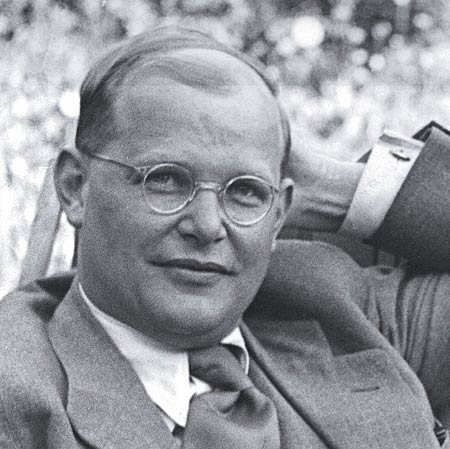
Dietrich Bonhoeffer tells us there is no such thing as Cheap Grace
"Cheap grace is the preaching of forgiveness without requiring repentance, (it is) baptism without church discipline, Communion without confession, absolution without personal confession. Cheap grace is grace without discipleship, grace without the cross, grace without Jesus Christ, living and incarnate."
What do we make of the promises that we have been thinking about that come to us as free gift from God?
God is not just toying with us.
He is not suggesting that there is no such thing as a free lunch,
or that there is always a catch
but rather that now, having heard the promises of God:
For example the new heart promised by Ezekiel's God, or the washing away of sin,
the gift of abundant and eternal life
promise by Jesus to those who are born again
If we are to live out of these promises
then we are to live rather differently.
We cannot have a different quality of life
and just go on living as though nothing has changed.
This is Bonhoeffer's point... no cheap grace...
there are consequences
not because God is tricky
but because God wants us to live our lives well
If we want forgiveness, then we must act as if forgiven
We must live differently, we must forgive,
we need to confront our own darkness: sin, selfishness and evil
If we want God to be close
then we must live close to God
..prayer, worship service
will be the watchwords...
let's not play games.
Quality relationships?
Then let's love unconditionally.

This repentance, is about making a choice to live rather differently.
Not just about dealing with the bad stuff
(though it is that)
but also about living the faithful, humble, life of Christian integrity.
Stop playing games.

We remind ourselves again
God who is rich in mercy
out of the great love with which he loved us
even when we were dead through our trespasses
made us alive together with Christ.

May we choose to live out of that promise