Pages

Tuesday, June 23, 2009

Courage to trust

Readings for Pentecost 4 (Proper 13) Today; Sunday 28th June include: 2 Samuel 1:1,17-27;Psalm 130;2 Corinthians 8:7-15; & Mark 5:21-43 (This week's reflection was also discussed during Lent)
The Gospel passage is not without its difficulties

Two accounts of people being healed. We often get sidetracked by the fact that the woman with "the issue of blood" as the KJV euphemistically put it is ritually unclean .

I think this was probably the least of her worries!

In different ways people come to Jesus seeking healing. Jairus comes as a man of prestige and religious standing seeking help from someone who is not socially acceptable 
Jesus! 
The woman, I think,is a destroyed person whose sense of personal worth is so low that she cannot even come and front Jesus face on. 
Part of the message that Mark is communicating here is that it doesn't matter who you are 
that Jesus is open to all. More than this, because he is inviting people to respond out of faith 
we recognise that faith requires risk 
Jairus risks his reputation the woman risks being knocked back again. 
What do we risk to be challenged by the Gospel, 
or have we so controlled our experience that we have taken all the risk and challenge out of it.  
Faith will inevitably invite us to move out of the zone where we control everything 
(because we recognise in reality that nothing is actually ours to control) THIS WEEK 
Where does God invite me to trust him and him alone? 
Do I have the courage to do it? 
To risk my reputation/failure or what ever? 
Pray to trust God alone

Wednesday, June 17, 2009

Awaking the sleeping Jesus


Readings for today, Sunday 21st June 2009...The Third Sunday after Pentecost (Proper 12) 1 Sam 17:1-49  (David and  Goliath), and/or  1 Sam 17:57-18:5, 10-16; Psalm 133;  2 Corinthians 6:1-13, Mark 4:35-41

I always think when I read this story in Mark  4 of Jesus calming the storm
that my life almost always feels like a boat that is about to be swamped!
It is an image the Mark uses deliberately, I think, to speak to us about the nature of our lives.
The feeling of being swamped is ever with us.
What this story reminds us of too
is that Jesus is also always with us
This is his post-resurrection promise
-I will be with you always-
but we treat him as though he is asleep
it's often more convenient for us that way!!

The gist of the story is straightforward
we awake the sleeping Jesus and he can deal with the situation,
but there is more here than that.
He actually rebukes his disciples for their lack of faith.
Is he telling them here
that they should trust their own faith?
like David or like Paul,
and not simply drop their bundle and say ...Here you sort it all out!
This is often the way we treat God.
Let him sleep until we get into trouble!
then wake him up and drop the problem in his lap.
The rebuke that Jesus utters is about God expecting more of us than this.

We are to be people of faith
and to use that faith
....do not let God's grace be in vain...
but rather act out a life of faith.
It is Jesus's promise to us
not that he will make all our problems disappear
but rather that we will be able to live our life in God's power
to do what God wants us to do
and to be faithful.
So it's not that Jesus can't meet our needs
it's that we also need to recognise that our needs can be met
by what God has given to us.
God does not expect us to allow ourselves to be overpowered by his majesty
but rather to cooperate with him.
This is what David did
this is what Paul did.
It is the way that Jesus shows us.

Conclusion
I hope that we see that these stories move us on.
From a dependent immature faith
to one that acts powerfully in accord with God's will.
Our brashness, like David's needs to be tested
we should not just presume on God's mercy.
But let's not waste what God has laready done for us.
Anbd being conscious of Jesus ever with us
we also are called to act as he acts.
This is powerful and important stuff that we are called to. Let this be the character of your life.

Thursday, June 11, 2009

The principle readings for this 14th June 2009 the 2nd Sunday after Pentecost are I Samuel 15:34-16:13 Psalm 20; II Cor 5:6-10; 14-17  Mark 4:26-34


Although it would be easy to think that ‘applying the Gospel’ is just common sense; we are reminded this week that we do not always see things in the way that God sees them
God looks on each human being with love and affirmation
there is nothing about me or you that God 
     does not,
     cannot
     and will not love

BUT
that does not mean that God validates everything we do
in fact we are rather told that it is the other way around
We need to try and see as God sees
rather than to bludgeon God
into seeing things the way we do.
Perhaps our prayer
and spiritual effort
is better spent
trying to hear what God is inviting us to be and do
than in trying
to manipulate God
to do what we want.
St Paul says of this journey
we are called to walk by faith
That is to discern God’s will for us and to do that.
A little sign of this is given when Samuel is discerning who will succeed Saul as king, and he is reminded that so often we look at fairly arbitrary human characteristics
Popularity, success, physical stature
even age and experience
(this is the way of the world)
but Samuel is reminded to look at the heart.
Jesus uses the image of the seed
growing secretly and surprisingly
to remind us that it is
God who guides growth
and development.
and fruitfulness is often surprising
and different from what we expect

THIS WEEK
As we prepare for parish planning
can we pray for openness to God’s purpose
Pray for insight to see
where we are trying to manipulate God
instead of being open to the Spirit.

Lord of the hearts
fill me with your love 
this and every day
that I may be open 
and ready to respond to your gracious spirit
and that I may be fruitful


Tuesday, June 02, 2009

Readings for Trinity Sunday, 7th June 2009 can include Isaiah 6:1-8, Romans 8:12-17;John 3:1-17;Psalm 29
Perhaps the most ‘doctrinal’ Sunday of the year we celebrate the Christian mystery that God is Trinity.
But we misunderstand Trinity if we think it is highly theoretical or speculative.
At the core of the Trinity is the idea that our God is the God with whom we are in relationship.
The language,
Father Son and Spirit
is the language of close relationships like a parent and a child
like those with a deep spiritual connection
it is not impersonal or abstract

So this week

Take a little time to nurture your personal relationship.
Listening and talking is the way to do this

The second dimension that we encounter today
is that each member of the Trinity is there as an agent of Love.
The Father loves the Son, the Son loves the Father, the Spirit is there to enable the love to deepen and grow.
This relationship or rather these relationships
are there to serve each other.
This is the nature of the Godhead
the mystery oif the Trinity
each person is there for the welfare of others
The Father loves the world so much
that he gives his Son
the Son loves the world so much
that he gives his life
the Spirit so loves us that we are filled with love for the Father and the Son.
The idea of Trinity
is that we are fulfilled in community
in so far as we give our life for others.

When Isaiah get his glimmer of God’s glory
he is reacting as Godly people have done throughout the generations
“How,” we ask “are others to hear about God?”
“Who will speak? Who will tell?”
The answer is that Trinity life...God-life is about living for others
“Here am I send me!”
the challenge

THIS WEEK
Where does God call me to live my life for others?
Is there someone who I am called specially to be here for this week?

As part of my call to be a worshipper of the Holy Trinity God I commit myself to this in this coming week.


Thursday, May 28, 2009

Life in the Spirit

Readings can include Acts 2:1-21; Ezekiel 37:1-14;Psalm 104:24-34, 35b;Romans 8:22-27; John 15:26-27; 16:4b-15
Although it is difficult to pick any of the events of the Easter mystery as the pinnacle or climax
in a real sense Pentecost is of great significance because it prepares us for our life as Christians
the gift of the Holy Spirit to the faithful and expectant disciples
is the gift of the Father to live the life that Jesus, the Word of God calls us to live.
The readings talk of many things:
    Renewal
    life being breathed into what looks as though it is dead
    Truth
    Peace 
    Joy 
And each of these deserves its own individual treatment.
Indeed this demonstrates to us that the Holy Spirit is not a quick fix...but is about God dealing with us comprehensively and completely.
Why would we expect anything else?
This is about the whole of our life and the whole of the world.
Indeed a prayer we often pray is 
Come Holy Sprit and renew your whole creation
So often we seem to think that God is just dealing with my little patch
It is about "the whole creation"
It is also about God dealing with us deeply
and not just tinkering in a titillating or superficial way.
This JOY that the Spirit brings is not merely an amusement or an entertainment it is about the absolute delight and sense of privilege that we know in being caught up iun the mystery of what God has been doing since before the foundation of the world.
It is perhaps the surest sign of the Spirit’s activity in our lives.
Where do you experience the deepest joy in your life?
It is a challenging question.
So often we mistake amusement for joy
yet often joy is about difficult stuff
about working through the challenging issues of life
and realising that although we are often confronted with danger, struggle, weakness
that the Joy that the Spirit brings transforms our life

This week
●Where has God given you the greatest JOY
●How can I nurture this
●What is God inviting me to be, know and do, by this active power and presence of the Spirit?

Wednesday, May 20, 2009

Moving on in faith

Readings for the Sunday after the Ascension (Seventh Sunday of Easter) May 24, 20098 Acts 1:15-26 Psalm 1,  I John 5:9-13 John 17:6-19

Now this can either be hard or easy!
Because, either the point of the physical removal of Jesus
that we call The Ascension
is an insurmountable obstacle to 21st century rational-scientific minds
or it is as easy as recognising
that in order to mature
we cannot go on having others
doing for us what we need to do for ourselves!
I opt to think, today, about the Ascension
in this latter way!

In the most obvious sense
God wants mature men and women.
People who will have depth and understanding
that is not achieved
by always stepping in making up for our inadequacies.
Any parent knows the truth of this.
Indeed anyone in any relationship whatsoever
needs to understand this,
we are not called to step in and make up
for the inadequacies, mistakes and failures
of others.
However well-intentioned,
this breeds immaturity and over-dependence,
rather than freedom, initiative
and sophisticated maturity.

There is a difference between supporting people in difficulty
and in not allowing people the opportunity to make their own mistakes!

The withdrawal of the physical presence of Jesus
rather than being an expression
of God's disappointment and heartbreak with the world
can and should actually be seen
as a statement of faith by God in you and me.
God believes that we have within us
the means to be effective people
God believes that we have within us
the means to be effective church
God believes that we have within us
the capacity to fail and to know that failure is not the end

This is what is going on

Two encouragements
This is something about the very nature of what relationship
with God is all about
We are not passive observers
of a world in which God is active
but we are ministers of God's presence to the world.

Now what does a minister do?
A minister acts on behalf of someone
So, a Minister of the Crown exercises authority of behalf of the Queen and the Government.
A minister of the Church
acts on behalf of God.
And we understand that Baptism
confers upon you and me
the responsibility
to be Minister of Jesus
We will say We are the Body of Christ
So Jesus can say to the Father...
I am no longer in the world but they are in the world.

Now this 'they' who he is talking about is you and me


We may feel as though this is too hard sometimes
Jesus prays for our protection
he prays that we may be united to each other
and that we may be filled with joy

He does not pray
that we should be relieved of responsibility
or taken out of the world.
But rather that we should exercise this responsibility

It is a great statement of the trust that God put in you and me
as ministers
to act with confidence in the name of the God who equips us for ministry.

May this be ours too

This week
  • Can we look for opportunity to a faithful minister and commit ourself deliberately to God's care and protection as you seek to be more faithful
  • Look at the circumstances in which we live and see where God is calling us to serve others.
    Pray deliberately for joy where ever we find ourselves to be
..

Tuesday, May 12, 2009

What ever we want!

Readings for Sunday May 17th, the 6th Sunday of Easter  Acts 10:44-48;  Psalm 98;, 1 John 5:1-6, John 15:9-17

St John in the section of the first letter that we read today
reminds us that we come to understand 
what life is about
and how things fall into place
by faith.
This is the victory that conquers the world,
our faith.

This is a seemingly innocent, even predictable, statement
which we may gloss over.
But it is also in a real sense the key.
We proceed to live life in a different way because of faith.
This is about a decision that we make to choose to live life in a deeper
more authentic way.
John hammers home Jesus’s bold assertion that everything flows out of the reality that God loves us.
It is not the declaration of rules and laws, but the reality of a commitment to live life in a radical and deep way
(Perhaps what Scott Peck called the “Road Less Travelled”)
So we are confronted again by the challenge to go out and bear fruit
and we hear the promise
that this fruitfulness will be undergirded by God’s provision of whatever we ask for 
and need to be fruitful.
Notice (as last week) this is not 
wish-fulfilment (the new bike syndrome)
this is purpose-driven   
God makes provision 
out of his love
for everything we need
to live the kingdom life
which brings us the promise of abundance
—–let’s not play games with God
thinking he is a slot-machine
—–we are trying to live the life of faith
so we are likely to need to pray for:
—–forgiveness, love, reconciliation, patience, generosity
much more important than 
a new bike, or even wealth
Abundant, eternal life
will in the end seek to draw out of us
a life of faith 
This is the victory that conquers the world...our faith

THIS WEEK
What do we want  and need  to live a life of faith?

What is to stop us asking for it?


Thursday, May 07, 2009

Fruit of the vine

Readings for today, Easter 5, May 10th 2009 , can be taken from Acts 8:26-40, Psalm 22: 26-32, 
South Australians in particular appreciate this image of the vine that Jesus uses in John 15
It is a sumptuous and engaging image
and bears much thinking about, with reflection and prayer.
God wants us to be fruitful
he wants us not to have meagre lives
but abundant lives.
Some times we need to understand that fruitfulness comes about by a process of pruning
that is by cutting back
by curtailing ourselves
This process is for long-term fruitfulness
even though in the short term 
it may limit or even seem like it hurts
The passage from 1John reminds us that God’s sole motivation is  love for us
We are not the puppets of a dictator
we are the lovers of a God
who wants only our welfare.

DEEPER RATHER THAN SHALLOWER
All this prompts us to think that what is being suggested here
is deeper rather than shallower.
It is long-term transformation
rather than short- term titillation.

So when we read (as we do twice in this chapter) 
“ask what ever you wish and it will be done for you” 
we should realise that this is more than just wish-fulfillment.
God is seeking to respond to our deepest need.
I suspect that our deepest need is not to have more stuff or money
It is about attending to our need to be loved
and to love
In the end ...this will always be what we want.

However we name it, even if we have to begin with 
               “But I really want a new car!”
God is offering more than just to be Fr Christmas.
We know this because of John’s assertion over and over again
               God loves me! God loves you! God loves us!
So much so that he is prepared to confront death for us.
There is more being offered here than a new bike, a big house or a pile of cash.

THIS WEEK
Can you sit with the question...what do I really want?
Can we wrestle about that with God? (Why do I want more? Why do I need trouble to disappear)
What, God, are you offering?
Probably much more than we think!

Wednesday, April 29, 2009

Being a Good Shepherd


Readings for today, Easter 4, May 3rd 2009 , can be taken from Acts 4:5-12, Psalm 23 APBA p 243, 1 John 3:16-24, John 10:11-18

This comforting idea of The Good Shepherd
has appealed to countless generations of people.
Even those of us who don’t have a rural bone in our bodies
find it strangely comforting.
St John tells us that the difference between a Good Shepherd and the hired help
is that the good shepherd puts his life on the line for the sheep.
And we know Jesus’s care for us
in that he laid down his life for us.
And the moral point is (John tells us) 
that seeing how the Good Shepherd lay down his life
We ought to lay down our lives for one another
The Character of our relationships 
Is this how our relationships are characterised?
By the fact that we put our lives out there for those we love.
We don’t always get this right.

When we marry for example
we can make the mistake of thinking that our spouse is there to fulfil us.
The Good Shepherd idea would be that it is rather the other way around
We are there to see that our spouse is fulfilled
our life is at the service of those who we are called to love.

Not a recipe for being exploited
(indeed there should be a mutuality about this...it should go both ways)

THIS WEEK
we could give some constructive thought to where 
the Spirit invites us to ‘lay down our life’.
Is there someone whose life is our to care for?
How do we serve the other?
Interesting probably to think about those who we feel we don’t want to serve. What might that be telling us

The Good Shepherd is a challenge not just to a comforting image
but to a genuine disposition of our life.
The Good Shepherd lays down their life?
and 

Jesus, let me not a hired hand
show me 
how to truly care for others
as you do
that I may truly 
lay down my life

Thursday, April 23, 2009

Open to the possibility

Readings for Easter 3, 26th April Acts 3:12-20, 1 John 2:15-17, 3:1-6; Luke 24:36-48

There are perhaps two ways we can approach the resurrection stories:
One extreme is that we see them as symbolical narratives of great spiritual truth,
that way we don’t have to worry about whether the nature of the events is factual
we take them for their symbolical value
The other is that we just take at face value what we have always been told
and again, don’t think much about what we are encountering.
Last week’s Gospel reminds us that we should do more than just park our brains
We have to grapple with inconsistency and doubt.
Luke, though, is at pains to point out
the physical truth of the experience.
This passage we read tells us
This is not a ghost!
This is a fleshly body. you can touch,
which consumes food.
It is the resurrected body of Jesus.
THE MIDDLE WAY

Death inevitably confuses us. This death no less than others has its degree of confusion
We ourselves are invited to steer the middle way and to try to understand
what it is about
We see Peter for example, and the other disciples having to grapple likewise
as they come to understand
that the death of Jesus has fundamentally changed their lives
Death does that.
We are not to look at it only symbolically or to disregard our doubts
but rather to struggle with what it means to believe.
Peter gets to the conclusion
that this resurrection has made the
power of Jesus
available through his disciples
and not just through the body of Jesus.

We are invited in Easter to grapple with the life of Jesus.

How and why is Jesus alive for you and me?
And what are we to do with that.

This week:
Pray for insight and faith to believe aright
Pray for faith to grow in the resurrection
Pray for courage and insight about how to use that power

Lord of Easter,
show me your living presence this and every day.
Grant me grace to know how to live
in the power of your resurrection

Thursday, April 16, 2009

O ye of little faith!

Readings for this Sunday, Easter 2, 19th April 2009 Acts 4:32-37, 1 John 1:1-2:2, John 20:19-31

We would and do expect the accounts of the Resurrection experiences to be important parts fo the scriptural story.
They, after all. speak of what is at the heart of the Christian Gospel


that Jesus who once was dead
was encountered alive by the first disciples.
The stories are not straight forward
they are of course
sailing in uncharted waters.

We could make a couple of observations from todays readings:

ACTS: what ever else we see
the early church understood that things had changed
and there was a tremendous boost of energy
when Jesus was encountered alive
POINT: if we are wanting to focus our energies
then we look not to the empty tomb
but to the presence of the risen Christ
in our midst.

1JOHN: This is about seeing things as they are
God is light, and lights dispels darkness
We also need to be up front about where
we get things wrong
If we say we have no sin we deceive ourselves
But that is not the end
because God who faithful will and can forgive sins
and bring us into relationship with Jesus
POINT: This changes and deepens our relationship with God
and is an invitation to live with a new freedom

JOHN 20
We should expect Jesus to bring peace
in our relationships
and in our lives
And we also need to take this seriously
the story of Thomas
reminds us
that we are not required to park our brains
or arbitrarily dismiss our doubts
but rather that
in struggling with doubt
and inviting Jesus to deal with us realistically
we can move to a deeper and profounder encounter with God.


THIS WEEK


  • Where is God inviting and challenging you to respond at this time?

  • Where do you need peace? Where do you need light? Where do you grapple with doubt?

  • None of this need be negative: rather it is the opportrunity to be a deeper person, more deeply committed and energised by the Holy Spirit of God

Saturday, April 11, 2009

Celebrating Baptism at Easter

Easter Day, April 12th 2009. In our readings we particularly think about Mark 16:1-8 today
It’s always a great privilege
and very insightful thing to be able to baptise someone at Easter.
Easter is about new life and new beginnings
and baptism really invites us to adopt a lifestyle that is about Easter.
We affirm as we see Jesus
who once was dead, being declared to be alive
in a new sort of way
that this is the sort of character we want to live our life with.
We believe as Christians that this can only happen through faith in Jesus.
And so Jack and Catherine bring their daughter Marianne
to make that commitment on her behalf today.
She will need to learn how to practice this faith
and so Jack and Catherine, supported by Matthew and Wendy,
also promise to teach her by example
what it means
This is how children learn
by example.
But we are all given a clue
about the practice
by promising
three specific things
which remind us not only what children need to have explained to them
but also what we as Christians are called to reaffirm at this Easter time.
REPENT of your sins
This means that we need to stop doing the stuff that destroys us and others
Seek forgiveness and be forgiving.
REJECT SELFISHNESS in a world that is obsessed with ourselves
and what we can acquire
we reject the idea that people
achieve their full humanity by selfishness
RENOUNCE EVIL there is also bigger picture stuff
where we are seduced by ideas that people are disposable
or that we can exploit people as if they were to be bought and sold.

This is serious stuff
for Marianne.
We pray that Jack and Catherine will continue to do this.

And for each of us.
We renew our personal commitment
Don’t leave Church without it!!

Friday, April 10, 2009

Christus resurrexit! Don't be alarmed

Readings for today, Easter Day, can be traken from Acts 10:34-43, Is 25:6-9.Psalm 118, 1 Corinthinas 15:1-11, Acts 10:34-43, John 20: 1-18, Mark 16:1-8 (our selection is here)

Our Lenten pilgrimage is at an end
we find ourselves at the climax.
Mark's enigmatic account of what happens at the tomb
is an interesting challenge to the believer
those who go to look for Jesus
flee, in amazement and terror.
They are told by a young man ( who is perhaps an angel) "Do not be alarmed!"
What ever it is you are seeking
is not here at the tomb, it is elsewhere.
This seems to me (at the very least) good advice.
We have to move on from the tomb.
We have to get beyond what alarms us.
More than this it is a key part of understanding
what resurrection might be about.
It is certainly about trying to understand
what death is about
and death is often a point where we are
deeply ALARMED.
But it's not the only point at which we get alarmed.
We encounter death in our relationships
in our particular world views.
The message of the tomb would see to be
that we don't deal with death
by standing at the tomb.
As terrifying and amazing as this might be
(and it was for the disciples)
we are called to go elsewhere.
In this story the disciples are told to go back to the place
where they experienced life
It's called Galilee for these disciples
but may go by a different name for you and me.

Where are we experiencing the grave at the moment.
Don't be alarmed!
Go back to where you experienced Jesus
to where you knew true inspiration
and that things were right.

He is not at the point where we buried the body.
He has gone back to where he gives you life.

Thursday, April 09, 2009

A present far too small

Reflection for Good Friday, April 10 2009. Isaiah 52:13-53:12; Psalm 22; 1 Corinthians 1:18-31; Hebrews 10:16-25; John 18:1-19:42

The great hymn of Isaac Watts often sung on Good Friday, When I survey the wondrous cross says in its final verse
Were the whole realm of nature mine,
that were a present far too small;
love so amazing, so divine,
demands my soul, my life, my all.

I am often struck how some "religiously correct" versions change the original word
present to the more religiously correct word
offering
The two words don't mean the same thing, do they?
An offering is something that is required of us
it is our duty, our reponsibility
A present is an expression of love
and is given rather than exacted as a tribute.

Watts, I suspect, deliberately used the word present
and we should not use the word "offering" any more.

What this points us to
is that the story of the life and death of Jesus Christ
is not a remote religious tale
it is about the way we live our life.
It is in the world of 'presents' rather than 'offerings'

It is about how we live outside church
not inside
It is about present rather than offering

So Watts continues not with religious sentiment
but rather with the total commitment of life

love so amazing, so divine,
demands my soul, my life, my all

thus all the things we know about Good Friday
and all the challenge that it extends to you and me
is not about what we do here
in this holy building
it is about what we do at work.
The forgiveness that we seek
is about the sins we have committed in our job.
It is about how we live in our families.
The amazing love that we are called to exercise
is to our wives and husbands, our sons and daughters,
our brothers and sisters.

Being religious is a good way of distancing ourselves
from the realities of our life.
It is an offerng rather than a present.

This year, let us go beyond that narrow formal duty...the offering
and instead be a present to God
committed in our life, where we are, where we live.

Love, so amazing so divine, demands nothing less.

The New Commandment

Reflections for Maundy Thursday, April 9, 2009 See: Exod 12:1-4, (5-10) 11-14; Psalm 116, 1 Cor 11:23-26; John 13:1-17, 31-35

Things come together on this day.
in the liturgy for this evening
we perform ritual washing as a reminder to be a servant,
and we celebrate with care the Holy Eucharist
remembering that this was the night when Jesus gave it to his disciples.
We then reserve some of the sacrament as a sign of the presence of Christ
and remove the ornaments from the church.
This is a symbolical reenactment of Jesus being taken out into the garden of Gethsemane, where he is ultimately arrested, stripped and beaten.
Things come together in the Eucharist.

The Command
We don't often think of it like this but the Eucharist (The Lord's Supper, the Mass...or however you call it) is a command
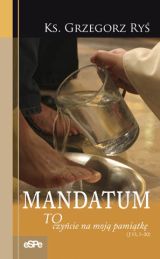
{This is where the word Maundy comes from...the Latin "mandatum" meaning a command.... we still use words like mandate and mandatory which have the same root}
Jesus tells us to break bread and drink wine, and remember him. We are to do this when we get together
And so Christians have done this for 2000 years.
Our experience is that as we fulfill Jesus' s command
so we experience Jesus amongst us.
The early Christians coined this phrase:
The disciples knew Jesus in the breaking of the bread.
As we fulfill the command we experience Jesus.

Tonight, we also read of another command
"Love one another as I have loved you."
And as Jesus says this he washes his disciple's feet.
When Peter protests he is told that this is the way we experience the fulness of life.
and Peter (over the top as ever) says: then wash me completely.
Jesus's command is that we should do what he has done
that we should serve others.

We are meant to make the connection between the two commands.
Eucharist is not just about ritual observance
it is about how we live our life.
Worship services are not what we are on about
they are rather an expression
of how we are called to live our life.
They are not the end in itself.

Our obedience to Chris't command to share the Eucharist
also commits us to obedience to service.

As Jesus goes out into the darkness of the Garden of Gethsemane
we are reminded that his call to follow him
will not be without its uncertainty and danger.
But in the end
we who know the truth of Christ
understand this invitation
to be a command that we embrace.
Each time we share the eucharist we are always
called to remember that we also called to serve

"I give you a new commandment, that you love one
another. Just as I have loved you, you also should love one another. 35By this
everyone will know that you are my disciples, if you have love for one
another.’"

Thursday, April 02, 2009

A Moment of Truth

During Lent we will be following a local series of lections.If you are looking for the Common Lectionary References try here Revised Common Lectionary

March Chagall's White Crucifixion

This week is Palm Sunday , 4th April 2009. While there are many readings on which we could focus we will look particularly at Mark 15:16-39.


As Holy Week begins our hearts turn to the Cross
We have made a pilgrimage this Lent
as we have worked through Mark's Gospel
The flow of the Gospel is unremitting

  • God's kingdom is here and now
  • We are challenged to identify completely with Jesus
  • We come to understand that in discovering who Jesus really is for us, we also discover who we really are
  • It is in listening to his call, and trying to respond that we open ourselves to God's transforming power
  • This journey requires, work, commitment, seriousness

Here, now on the Cross we see the climax of all this challenge
Jesus says to us:
I am an invitation to all people
to submit to the willof God
Knowing that there is no assurance of

  • what the circumstances might be
  • the troubles are that might emerge
  • Indeed, we recognise that it might be quite hard.
  • Perhaps even dangerous, certainly profoundly challenging

We trust that in the working out of this

All will be well....not all will be EASY

and that the fundamental reality of life

that in knowing Jesus we encounter God

  • Listen to him
  • Take up your Cross
  • One thing more you need to yield to God

It is not that we are rewarded for being good, compliant
It is that at this place...Calvary
destiny. meaning, purpose and truth
are revealed

This week is Palm Sunday , 4th April 2009. While there are many readings on which we could focus we will look particularly at Mark 15:16-39.


As Holy Week begins our hearts turn to the Cross
We have made a pilgrimage this Lent
as we have worked through Mark's Gospel
The flow of the Gospel is unremitting
God's kingdom is here and now
We are challenged to identify completely with Jesus
We come to understand that in discovering who Jesus really is for us, we also discover who we really are
It is in listening to his call, and trying to respond that we open ourselves to God's transforming power
This journey requires, work, commitment, seriousness


Here, now on the Cross we see the climax of all this challenge
Jesus says to us:
I am an invitation to all people
to submit to the will of God
Knowing that there is no assurance of
what the circumstances might be
the troubles are that might emerge
Indeed, we recognise that it might be quite hard.
Perhaps even dangerous, certainly profoundly challenging
We trust that in the working out of this
All will be well....not all will be EASY
and that the fundamental reality of life
that in knowing Jesus we encounter God
Listen to him
Take up your Cross
One thing more you need to yield to God
It is not that we are rewarded for being good, or compliant
It is that at this place…
CALVARY
destiny. meaning, purpose and truth
are revealed

    • THIS WEEK
      May this week be full of meaning Lord
      May I commit more fervently
      May I love you more

Tuesday, March 24, 2009

What must I do?

During Lent we will be following a local series of lections.If you are looking for the Common Lectionary References try here Revised Common Lectionary

The principle reading for this 29th March, 2009 the 5th Sunday in Lent is Mark 10:17-31, other readings include Jeremiah 31:31-34, Psalm 119:9-16, Hebrews 5:5-14


It seems that there is both a universal and a particular message
in this story of Jesus 's encounter with a rich young man
The particular message for this man
is that there is one area in which he hold himself back
from God.
That he may do all sorts of other things right
but there is still
one thing more
he will not surrender his fondness
for this world's wealth and security
The general message is that for each one of us
is there is always
"one thing more"
it may not be money, or security
(it may...it is very seductive)
but we are not to hold anything back.

What is it that we are reluctant to hand over to God?

The young man, and the disciples have rightly identified
that this is hard.
Let us not be seduced by the image....how then can it happen?
What is beiong said here is that
WE cannot effect our own salvation
It is indeed impossible for us.
We will always be compromised
always seduced by some other thing.
Our faith must be and can only be in God alone.

We can have faith that all this will work out
but we may not quite understand how.
We are not called to understand.
Weare called to have faith!

Thomas Merton, who we have talked about
in recent weeks
reminds us that this is serious business
we are not playing games with God
(so often we do!)
we are trying to bring our real self before God
because it is the only self
that is known by God.
This young man comes to Jesus
he presents not his real self
but what he wants the world to think he is like.
"All these commandments I keep,
I am a good person"
But Jesus sees right through this,
as he does so often with people who seek healing.
"You need forgiveness!" he might say
"You have go to sort out your relationships".
No game playing.
It is not a reward exercise
in which we get a prize for being good
It is that when we are known by God
that our life is fulfilled, right, good.
Anything less is a game.
It is (as Merton says) a false self.
God only knows our real self,
the pursuit and promotion of the false sself
leaves us sad and unsatisfied.
This young man grieves
the disciples are profounbdly shocked.
But the affirmation is this:
This is God's work, and with God nothing is impossible.
Anything else is false,
at best a game, and at worst the road to hell.
Can Easter be for you and me,
this time of presenting the real-self to God?
Of commitment to Christ, that we know is right.
But we may be too frightened to let go
of one (or maybe more than one ) thing?
THIS WEEK
What 'one thing' is God inviting me to yield to him?
How can I do it?
Pray each day: LORD HELP ME TO BE REAL

Tuesday, March 17, 2009

Transfiguring power

During Lent we will be following a local series of lections.If you are looking for the Common Lectionary References try here Revised Common Lectionary

For this Sunday, 22nd March, in the Diocese of Adelaide the focus readings will be Ephesians 2:1-10, Mark 9:2-13 (and Numbers 21:4-9)

[We have already reflected once on the Transfiguration story this year which marks the Sunday before Lent, this week we take opportunity to reflect as we look at it in the context of the flow of Mark's Goispel story]

Our experience of God is both natural and supernatural.
If we were to describe what our experience of God is like
we would no doubt find that we described some pretty mundane stuff.
How at meal times if we stop to give thanks
we can just be profoundly aware of the abundance that God provides for us each day.
How when we spend very precious time with people we care for
that often we are left with a sense of wonder at God's presence
Funerals, weddings, christenings... special but quite normal events
often leave us gob-smacked at their sense of power and God's given presence
in the very ordinariness but nevertheless authentic presence of God.
I am often struck at the Eucharist, which lies deep within our Anglican hearts;
the very Real Presence of the Lord God
as we gather together...two or three meeting in his name..

Equally well, I imagine if we were to have this discussion 
about how we encounter God
many would attest to experiences great and small
of the supernatural
These are important, but we make the mistake of thinking
that it is this supernatural experiences
which are what it is all about
and the natural encounters are secondary.
I rather suspect it is the other way around.
Jesus does not allow his disciples to enshrine the Transfiguration
and thus strip of its meaning.
Rather, Peter and James and John are reminded to keep quiet about it.
What is the purpose of it?
It is perhaps to reinforce and strengthen
what we discern through other spiritual means.
And what is reinforced


It is this....This is my Son the beloved
Listen to him

It is not that Jesus does not speak to us as we go through grief
or that when we talk carefully about forgiveness
and deal with issues of reconciliation, love and acceptance
it is that we are reminded that we need to Listen to him.
In particular Mark reminds us
that we are to listen to Jesus saying:
"If you are to follow, then you must take responsibility for your cross"
There is no cheap grace,
no good news without responsibility.
This is the Natural and the Supernatural teaching
Listen to Jesus
This week
  • As you reflect on the week gone by, what has God been saying to you? How has Jesus spoken with and to you?
  • This is a transfiguring voice. Our world will be different. What needs to change in my life if I am to respond in obedience?

Thursday, March 12, 2009

Who do You Say that I Am?

During Lent we will be following a local series of lections.If you are looking for the Common Lectionary References try here Revised Common Lectionary
In The Diocese of Adelaide on this 3rd Sunday in Lent, 18th March 2009, we are focussing on Mark 8:27-38

Does it really matter who or what we think Jesus is?
I have been privileged to rediscover Thomas Merton in the last few weeks, and as so often often happens with spiritual writers they speak afresh many years after first being encountered.
One of the things I hear Merton say is that we should take the search for God seriously,but that we should not become doctrinaire or dogmatic.
It is not that these things are unimportant, but that in the end it is our pursuit of God
and not our level of understanding
or depth of learning
that is the point.
This perhaps also points us to a truth about this question
that we encounter in this passage.
"Who do you say that I am?"
There are theologically and historically correct answers
but in the end what is being drawn out here
is more personal than that.
Merton says we should have "an awakened heart"
in order that we may be able to respond to God in love.

Jesus puts this differently by saying
If you recognise in me something that needs to be followed
a life that is authentic to God.
Then you don't just sit on that
You "take up your cross" and follow.

We all know Jesus
or know about him
if we are to follow then we need to act.
So how have you been going in Lent,
have you been able to listen and to act.
Is your heart a little more awake?

MY LORD GOD, I have no idea where I am going. I do not see the road ahead of me.

I cannot know for certain where it will end. Nor do I really know myself, and the fact that I think I am following your will does not mean that I am actually doing so.

But I believe that the desire to please you does in fact please you. And I hope I have that desire in all that I am doing.

I hope that I will never do anything apart from that desire. And I know that if I do this you will lead me by the right road, though I may know nothing about it.

Therefore I will trust you always though I may seem to be lost and in the shadow of death. I will not fear, for you are ever with me, and you will never leave me to face my perils alone.

- Thomas Merton, "Thoughts in Solitude"© Abbey of Gethsemani